Skip to content

Blog

Renovate or Rebuild: Is A Knock Down Rebuild Worth It?

· Montgomery Homes

Renovate or rebuild? It is one of the biggest questions homeowners face when their home no longer suits their lifestyle. See the real differences between renovating and knocking down to rebuild.

Renovate or rebuild: is a knock down rebuild worth it?

Disclaimer: Costs and approval pathways can change by site, suburb, and market conditions. Always confirm current figures, planning requirements, and site constraints before making a final decision.

Love where you live, but not the home itself? Maybe the layout no longer suits your family, or the house feels dated, dark, or difficult to maintain. 

In this case, you might be wondering whether to knock down and rebuild your home or renovate instead. We know this decision is rarely simple; it’s personal, practical, and financial all at once. 

This guide will help you compare renovations vs knock down rebuild projects, understand the real cost factors, and work out which path makes the most sense for your block, your budget, and your long-term plans.

Quick answer: Is a knock down rebuild worth it?

In many cases, yes! A knock down rebuild is often worth it when the existing home has major structural issues, the layout no longer works, or the cost of renovating keeps growing as more problems are uncovered.

A knock down rebuild is often worth it when:

  • You want major layout changes or a completely different home design

  • The house has serious defects, outdated services, or poor energy performance

  • You want cost certainty, new home warranties, and a home designed for modern living

Renovation may be the better option when:

  • The home has good bones and only needs limited upgrades

  • You want to preserve character features or heritage value

  • The work is smaller in scope and can be completed without gutting the house

Before you decide, the smartest next step is to compare both options side by side, not just on headline cost, but on risk, disruption, flexibility, and long-term value.
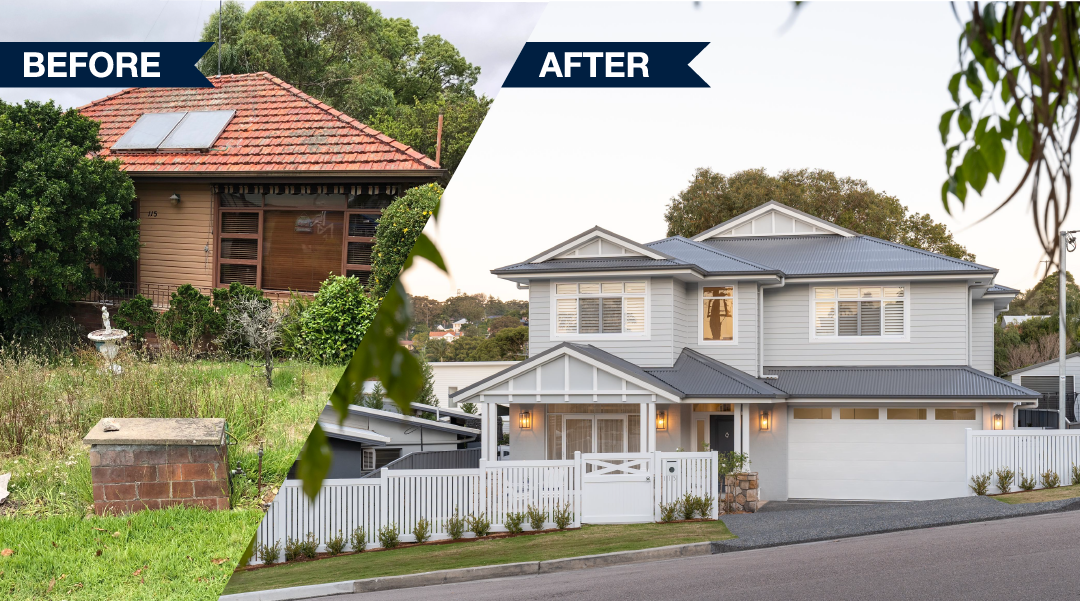
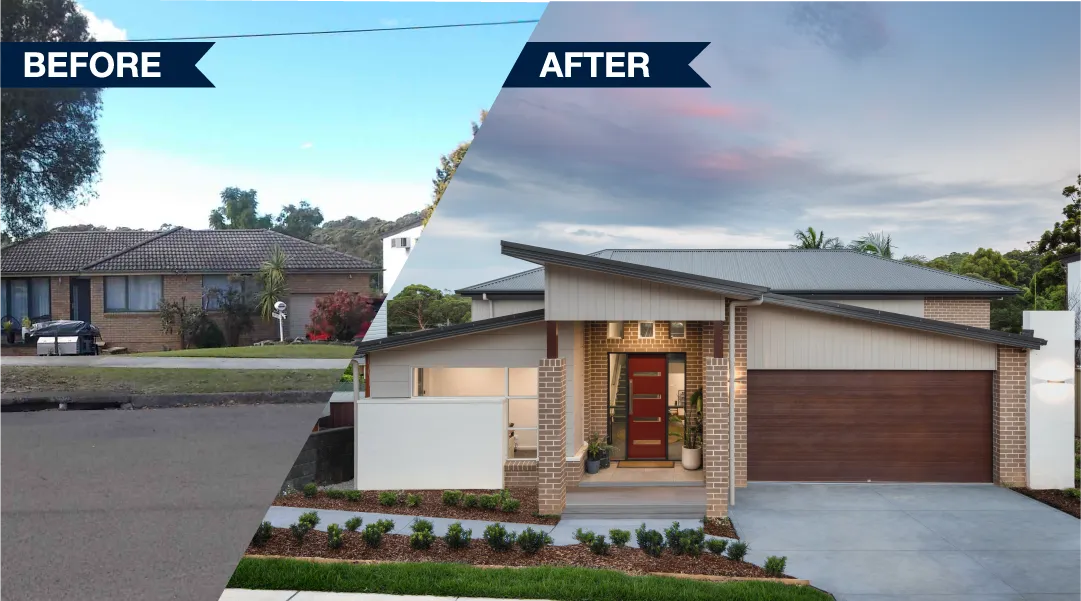
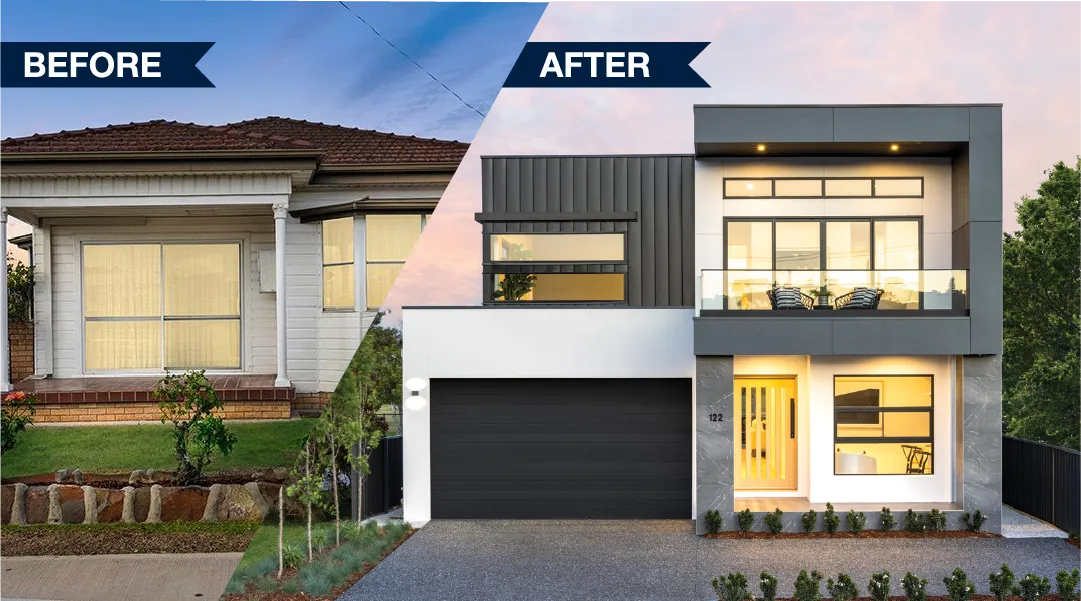
Renovation vs rebuild at a glance

FactorRenovationKnock down rebuild
Cost predictabilityLower at the start, but often less certainUsually clearer once site and design are assessed
Hidden surprisesMore likelyLess likely, but site issues can still affect cost
Timeline predictabilityCan stretch if issues appear mid-projectUsually more structured once approvals are in place
DisruptionCan be staged, but still disruptiveUsually requires moving out
Design freedomLimited by the existing structureMuch greater flexibility
Energy efficiencyCan improve, but often with compromisesEasier to design in from the start
Approvals complexityDepends on scopeDepends on site and planning pathway
Maintenance and warrantiesMixed old and newNew materials, systems, and warranties
Resale impactCan be strong if done wellCan be strong if aligned with local market
Long-term performanceDepends on how much is retainedEasier to optimise as a complete home

Seven easy questions to help you decide on your project type

Before choosing renovation or rebuild, ask yourself these seven questions:

  1. Is demolition allowed on your site? Check zoning, heritage controls, conservation areas, and any local restrictions first.

  2. How much of the current structure would you actually keep? If you are replacing most of the layout, services, and finishes, rebuilding may make more sense.

  3. Can the existing home’s orientation and daylight be improved enough? If the home will always feel dark, disconnected, or awkward on the block, starting fresh can be the better move.

  4. Does the house have good bones? Major cracking, damp, termite damage, asbestos, or outdated wiring and plumbing can quickly shift the balance toward rebuild.

  5. What are the block constraints? Slope, access, trees, retaining needs, flood or bushfire overlays, and sewer or stormwater issues can affect both options.

  6. Will you overcapitalise in your suburb? Compare the likely finished value with the local ceiling for similar homes.

  7. Have you budgeted for disruption? Think about rent, storage, extra interest, utilities, and how long you may be out of the home.

Does your existing home have “good bones”?

People often say a home has “good bones”, but what does that actually mean?

A renovation is usually more viable when the house is structurally sound, the floorplan is largely workable, and you can improve the home without opening up most of it.

Signs renovation may still work:

  • The structure is sound

  • Cracking is minor and stable

  • The layout needs improving, but not completely rethinking

  • Ceiling heights, natural light, and room sizes are still workable

  • Wiring and plumbing can be upgraded without stripping the whole house

Signs rebuild may be the smarter move:

  • Major cracking or movement

  • Rising damp or recurring water issues

  • Termite damage

  • Outdated wiring or plumbing throughout

  • Asbestos in multiple areas

  • Low ceiling heights

  • A layout that cannot be fixed without gutting most of the home

If you’re unsure, organise a building inspection before you commit. That can help you compare the home's actual condition with the cost of trying to save it.

Other considerations: local regulations and feasibility checks

knock-down-rebuild-sydney

Before moving ahead with either option, check:

  • Zoning

  • Heritage or conservation controls

  • Bushfire or flood overlays

  • Setbacks

  • Height and floor space ratio requirements

  • Tree controls

  • Access for machinery and demolition works

It is worth checking with the council, your planner, or your builder early. In NSW, the approval pathway may involve a CDC or a DA depending on the site and proposal, and BASIX requirements can also apply. A complying development is a fast-tracked process for eligible projects, while BASIX is part of the state’s sustainability framework.

When is a knock down rebuild worth it?

knock down rebuild

A knock down rebuild is often worth serious consideration when:

  • You are keeping less than half of the existing structure

  • You need major layout changes

  • The house has significant defects

  • You want better energy performance from the start

  • The land value is strong, but the house adds little value

  • Renovating would happen in expensive stages over several years

  • You want the protection of new home warranties

  • You want a home that better suits your block, orientation, and lifestyle

For many homeowners, the biggest value is not just a new house; It’s being able to stay in the area they already love while building something that works better day to day. That is also how we frame our knock down rebuild service and current cost guidance.

When renovations still win

A renovation can absolutely be the better choice when:

  • The home has heritage or character worth preserving

  • The structure is strong

  • The scope is relatively small

  • You only need one or two key areas updated

  • The block is unusual, and the existing footprint already works well

  • You want to minimise demolition and retain more of the original home

  • A faster, lighter-touch project is possible

This is why the right answer is not always to rebuild. It depends on what you are trying to achieve and what condition the house is actually in.

Beware creeping renovation

One of the biggest risks in renovations is “scope creep”. What starts as “just the kitchen” can quickly turn into rewiring, replumbing, replastering, flooring, painting, and structural work across half the home. This often leads to additional costs and budget blowouts. 

How to avoid it:

  • Start with a master plan

  • Set a whole-home budget, not just a room budget

  • Decide what stage one is and what is definitely later

  • Make sure finishes and design choices work together across stages

  • Set stop rules, such as reviewing the strategy if you are opening three or more wet areas

Approvals and timelines: what to expect

While every project is different, a knock down rebuild often follows these stages:

  1. Feasibility and site review

  2. Design and selections

  3. Approvals, such as CDC or DA

  4. Demolition

  5. Site works

  6. Slab

  7. Frame

  8. Lock-up

  9. Fit-out

  10. Handover

Common delay causes include approval backlogs, weather, supply issues, difficult site conditions, and owner-requested variations. With us, the process starts with a free design consultation and site inspection, followed by a detailed tender to help clarify costs and scope.

Where will you live, and what will it cost?

This is one of the most overlooked parts of the decision. If you knock down and rebuild, you will usually need to budget for:

  • Rent during the build

  • Storage

  • Utilities disconnection and reconnection

  • Double-mortgage risk, if relevant

  • Interest during construction

A simple holding-cost formula is: 

Monthly holding cost = rent + storage + loan repayments + estimated utilities/admin costs

This doesn’t automatically make rebuilding the wrong decision; it just needs to be part of the real comparison.

Will you overcapitalise in your suburb?

Before committing to a large renovation or new build, compare your likely finished value against the top end of your local market. A practical way to sense-check this:

  • Review recent sales of newly built homes in the suburb

  • Compare homes on similar block sizes

  • Speak with local agents who know buyer expectations in your area

  • Leave a buffer for market shifts and unexpected project costs

The goal is not just to create a better home; it’s to make sure the investment still makes sense for your suburb.

Finance, contracts and risk

Whichever path you choose, pay close attention to the contract and how risks are managed. Key things to look at:

Helpful questions to ask a builder include:

  • What site costs are included?

  • What is excluded from this price?

  • How are variations handled?

  • What approvals are expected for this site?

  • What experience do you have with similar blocks or rebuilds?

A clear process and a clear contract can make a big difference to how confident you feel from day one.

Energy efficiency: easier to build in from the start

A new home gives you the chance to design for insulation, sealing, glazing, orientation, and performance from the very beginning. That can be easier than retrofitting an older house that was never designed with those goals in mind.

In NSW, BASIX is part of the approval landscape for relevant residential development, and the NSW Government supports rooftop solar with state and federal incentives.

FAQs

Is knock down rebuild worth it? It can be, especially when the existing home has major defects, poor layout, or limited long-term potential. It is often worth it when you want a modern home in the same location with clearer cost certainty and new home warranties.

Is it cheaper to renovate or rebuild? It depends on the scope and the condition of the existing house. Smaller renovations are often cheaper. Large-scale renovations involving structural work, hidden defects, and service upgrades can cost more than expected.

Can I stay living in the house? Sometimes during a small renovation, yes. During a knock down rebuild, usually no. You will generally need to move out for demolition and construction.

How long does a knock down rebuild take? Timelines vary by site, design, approvals, and construction conditions. The process usually includes feasibility, design, approvals, demolition, site works, construction, and handover.

What permits do I need? That depends on your site and proposal. In NSW, approvals may involve a CDC or a DA, and BASIX may also apply. Always confirm the right pathway early.

So, should you renovate or rebuild?

If the existing house is structurally sound, the layout mostly works, and your scope is limited, renovation may be the smarter move.

If the home has major issues, the layout is fundamentally wrong, or you want a completely different result with better long-term certainty, a knock down rebuild is often worth serious consideration.

At Montgomery Homes, we help homeowners make that decision with a free site inspection and practical advice based on the block, the home, and the outcome you want to achieve. If you are weighing up renovation vs rebuild, we can help you understand what is possible before you commit. Contact us today!

References

Renovate or Rebuild: Is A Knock Down Rebuild Worth It?