Blog
What Is a Dual Living Home? A Guide for NSW Families
· Montgomery Homes
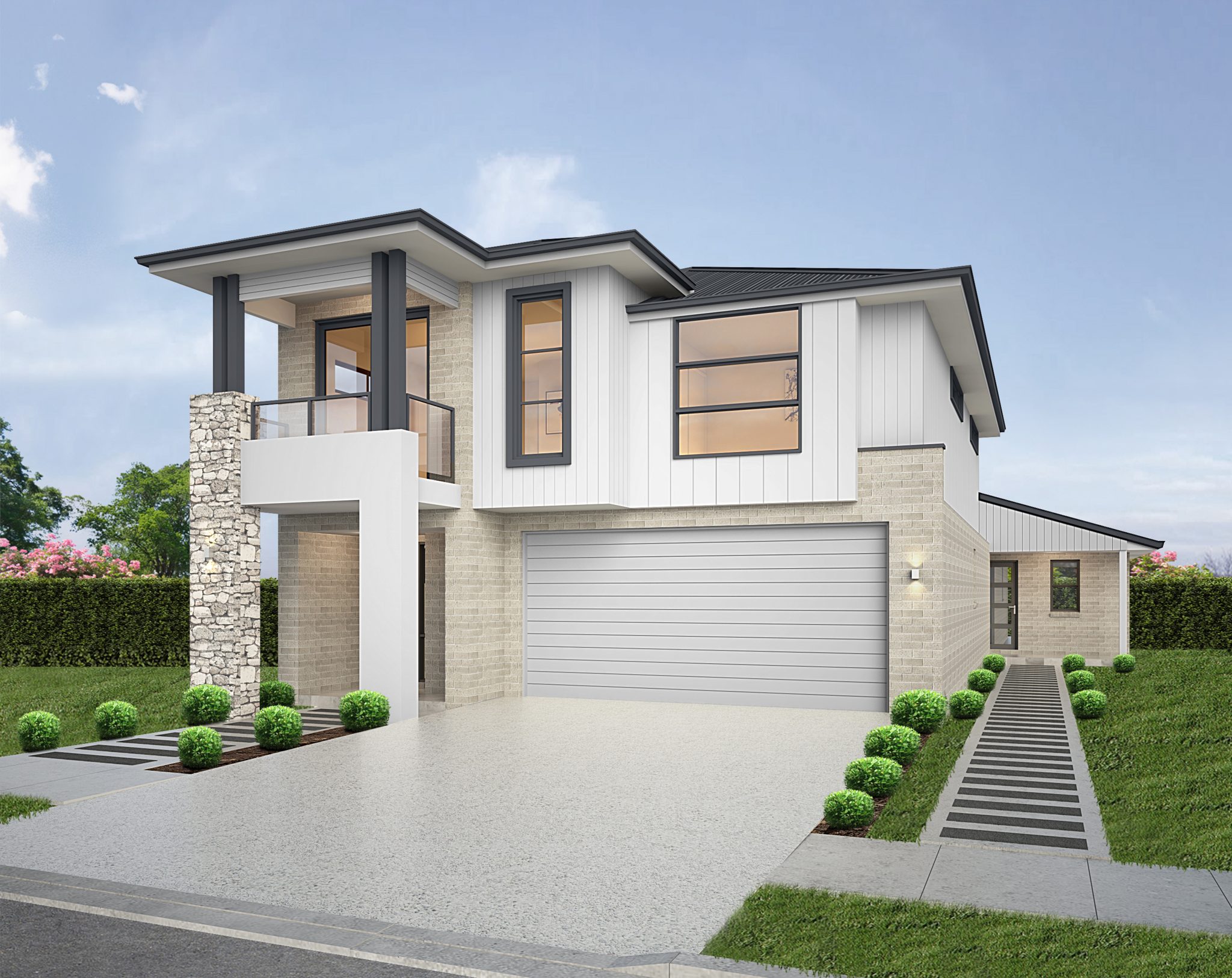
Explore what a dual living home is, how it compares to duplexes and granny flats, and whether it suits your family's needs or investment goals.
Blog
· Montgomery Homes
Explore what a dual living home is, how it compares to duplexes and granny flats, and whether it suits your family's needs or investment goals.
A duplex house is a single building divided into two separate, self-contained homes that share one common wall, each with its own entrance, kitchen, bathroom and living space. Duplexes are one of Australia's most common medium-density housing types, and they're a popular choice for first-home buyers, investors and families wanting to share a block without sharing a roof.
Key characteristics of a duplex:
Two dwellings share a common (party) wall, usually arranged side by side
Each dwelling has its own entrance, kitchen, bathroom and outdoor space
The two dwellings can be on one title or subdivided into two separate titles
Duplexes are often built as mirror-image or near-identical floor plans
They can be owner-occupied on one or both sides, rented out, or sold separately
If you've also come across the term "dual living" and aren't sure how it differs, the short version is this: a dual living home is one house with two independent living areas under a single roof and a single title, built for one family's use rather than for separate sale. We'll unpack that distinction properly further down the page!
Glossary of terms
What is a duplex house?
Types of duplex houses
Planning approvals and terminology
Are duplexes one title or two? Torrens vs strata
Duplex vs dual living, dual occupancy, granny flat, and dual key
Typical ongoing costs to check
Pros and cons of a duplex
Who is a duplex best for?
FAQs
Housing terms in Australia get used loosely, and even councils don't always agree. Here's what each term means as we use it on this page, with a link to where it's covered in more detail.
Duplex: Two attached dwellings, usually designed for separate sale or independent ownership.
Dual occupancy: The planning term for two dwellings on one lot, which includes duplexes and some other configurations.
Dual living: One house with two internal living areas, built for one household's use rather than separate sale.
Dual key: A single title property split into two lockable, separately accessible sections, often used for investment flexibility.
Granny flat (secondary dwelling): A smaller, secondary dwelling on the same block as a main house, which can't be sold separately.
A duplex is a single building split into two complete, independent homes. The two dwellings sit side by side or one above the other, and each one functions as a fully separate house, not a shared living arrangement.
Structure: the two homes share a common wall (or a common floor and ceiling in a stacked design), with independent structural framing on either side of that shared element.
Entrances: each dwelling has its own entrance, usually positioned so that both households can come and go without crossing into the other's space.
Amenities: each side has its own kitchen, bathroom, living and sleeping areas, laundry, and typically its own car space or garage.
Common configurations: the most common layout is side-by-side, where both homes face the street with a shared wall running front to back. The other common layout is stacked, or "up-and-down," where one dwelling sits above the other, more typical on narrower blocks.
Duplexes generally come in three configurations, and the right one depends on your block shape, orientation and what you're trying to achieve.
Side-by-side duplex: The most common configuration with both dwellings sitting next to each other and sharing a vertical wall:
Privacy: good separation, since bedrooms on each side can be positioned away from the shared wall
Block suitability: works well on standard or wider blocks with street frontage for both dwellings
Common buyer profile: investors wanting to subdivide and sell separately, or families building for two households side by side
Stacked (up-and-down) duplex: One dwelling sits above the other, sharing a common floor and ceiling rather than a wall:
Privacy: requires careful acoustic design, since noise transfer between floors can be more noticeable than through a shared wall
Block suitability: suits narrower blocks where a side-by-side layout won't fit
Common buyer profile: developers and investors working with tighter or narrower sites
Front/back duplex: The two dwellings sit one behind the other on the block, usually connected by a shared driveway or accessway:
Privacy: strong privacy between dwellings, since there's no shared wall
Block suitability: suits deep, narrow blocks or corner blocks with secondary street access
Common buyer profile: families wanting more separation between generations, or investors on deep blocks
Here's where things can get genuinely confusing: in NSW Planning terms, "dual occupancy" is the formal land-use category, and what most people call a "duplex" or "semi" generally falls under that same category.
According to the NSW Government's Planning guidance, dual occupancies are often known as duplexes or semis, and the arrangement can be either attached or detached depending on the lot. Other states and councils use similar but not identical terminology, so the label on a real estate listing doesn't always match the formal planning classification.
Checklist before you build
Confirm your zoning allows dual occupancy or duplex development under your council's Local Environmental Plan
Check the minimum lot size required, since this varies significantly between councils
Ask whether your project qualifies for a fast-tracked Complying Development Certificate (CDC), or whether it needs a full Development Application (DA)
Confirm what subdivision pathway (Torrens, strata, or none) is actually achievable on your specific block, since not every site supports every title type
Check for any overlays that might affect your build, such as flooding, bushfire or heritage controls
Because these rules genuinely differ by council and by state, always confirm current requirements directly with your local council's planning department before finalising any duplex plans.
One of the most common questions about duplexes is whether they come with one title or two, and the answer depends on how the property has been subdivided.
Torrens title: Each dwelling is subdivided onto its own separate parcel of land, with its own title, boundaries and full independent ownership. This is generally the most straightforward structure for financing and resale, since each dwelling is treated much like a standalone house.
Strata title: The two dwellings are registered under a single strata scheme, with each owner holding title to their individual lot plus a share in any common property, such as a shared driveway. Strata duplexes involve an owners corporation (or body corporate), even if it's a simple two-lot scheme.
Single title, no subdivision: In some cases, a duplex remains on a single title, with both dwellings owned together, similar to a dual living arrangement, though this is less common for duplexes specifically designed for separate sale.
Checklist before you buy or build
Ask whether the property is a Torrens title, a strata title, or a single undivided title
If strata, ask about shared insurance arrangements and how premiums are split
Ask what's classified as common property, and who's responsible for maintaining it
Check whether any subdivision has actually been registered, or is only proposed
This is general information rather than legal advice, so it's worth confirming the specific title structure and its implications with a conveyancer or solicitor before you commit to buying or building a duplex.
| Type | Structure | Entrances | Title/subdivision | Can it be sold separately? | Typical use case |
| Duplex | Two attached dwellings, shared wall | Two separate entrances | Torrens, strata, or single title | Yes, if Torrens or strata titled | Investment, resale, or two-household living |
|---|---|---|---|---|---|
| Dual living | One house, two internal living areas | Two entrances, one building | Single title, no subdivision | No, not without major rework | Multi-generational living, flexible family use |
| Dual occupancy | Two dwellings on one lot (planning term) | Two entrances | Single title initially, subdivision optional | Depends on subdivision outcome | Broad planning category that includes duplexes |
| Granny flat (secondary dwelling) | Smaller secondary dwelling on the same block | Two entrances, different scale | Single title, cannot be subdivided | No | Ageing parents, rental income, home office |
| Dual key | One dwelling split into two lockable sections | Two entrances, shared internal access point | Single title, no subdivision | No | Investment flexibility, short-term rental, guest accommodation |
Here's where things can get genuinely confusing: in NSW Planning terms, "dual occupancy" is the formal land-use category, and what most people call a "duplex" or "semi" generally falls under that same category.
According to the NSW Government's Planning guidance, dual occupancies are often known as duplexes or semis, and the arrangement can be either attached or detached depending on the lot. Other states and councils use similar but not identical terminology, so the label on a real estate listing doesn't always match the formal planning classification.
Checklist before you build
Confirm your zoning allows dual occupancy or duplex development under your council's Local Environmental Plan
Check the minimum lot size required, since this varies significantly between councils
Ask whether your project qualifies for a fast-tracked Complying Development Certificate (CDC), or whether it needs a full Development Application (DA)
Confirm what subdivision pathway (Torrens, strata, or none) is actually achievable on your specific block, since not every site supports every title type
Check for any overlays that might affect your build, such as flooding, bushfire or heritage controls
Because these rules genuinely differ by council and by state, always confirm current requirements directly with your local council's planning department before finalising any duplex plans.
Ongoing costs for a duplex can look quite different depending on whether the dwellings sit on separate titles or share a title, so it's worth checking each category rather than assuming.
Council rates: generally charged per title, so a Torrens title duplex usually means two separate rate notices, while a single-title arrangement may mean one combined notice
Water and utilities: separately titled or separately metered dwellings typically have independent water and utility accounts; shared metering arrangements need a cost-sharing agreement between owners
Building insurance: strata duplexes generally require a single joint policy covering the shared structure, arranged through the owners corporation; Torrens title duplexes can usually be insured independently by each owner
Shared maintenance: costs for anything classified as common property, such as a shared driveway or fence, are typically split between owners under a strata scheme or an informal agreement for Torrens title
Body corporate or strata levies: if the duplex is strata titled, expect ongoing quarterly levies to cover shared insurance, maintenance and any sinking fund contributions
Because these arrangements vary significantly by title structure and state, it's worth requesting the actual cost breakdown for a specific property rather than relying on general estimates.
Pros:
More affordable entry point than a comparable detached house on its own block, particularly in high-demand areas
Rental yield potential, since two dwellings can generate two separate rental incomes
Generally, lower land cost per dwelling than building two standalone houses
Can suit multi-generational families wanting proximity with genuine separation
Torrens title duplexes can be sold individually, giving more exit flexibility than a single larger home
Often more manageable maintenance than a large single dwelling, since floor areas per side are typically smaller
Cons:
Shared-wall noise can be noticeable if the acoustic separation wasn't well designed
Limited renovation freedom, particularly for anything touching the shared wall or roofline
Neighbour dependency, since insurance, shared repairs, and driveway use often require agreement with the adjoining owner
Resale comparables can be harder to find in some areas, which may affect valuations
Strata duplexes come with ongoing levies and body corporate obligations
Two dwellings on one block generally means a smaller private outdoor space per household than a standalone house
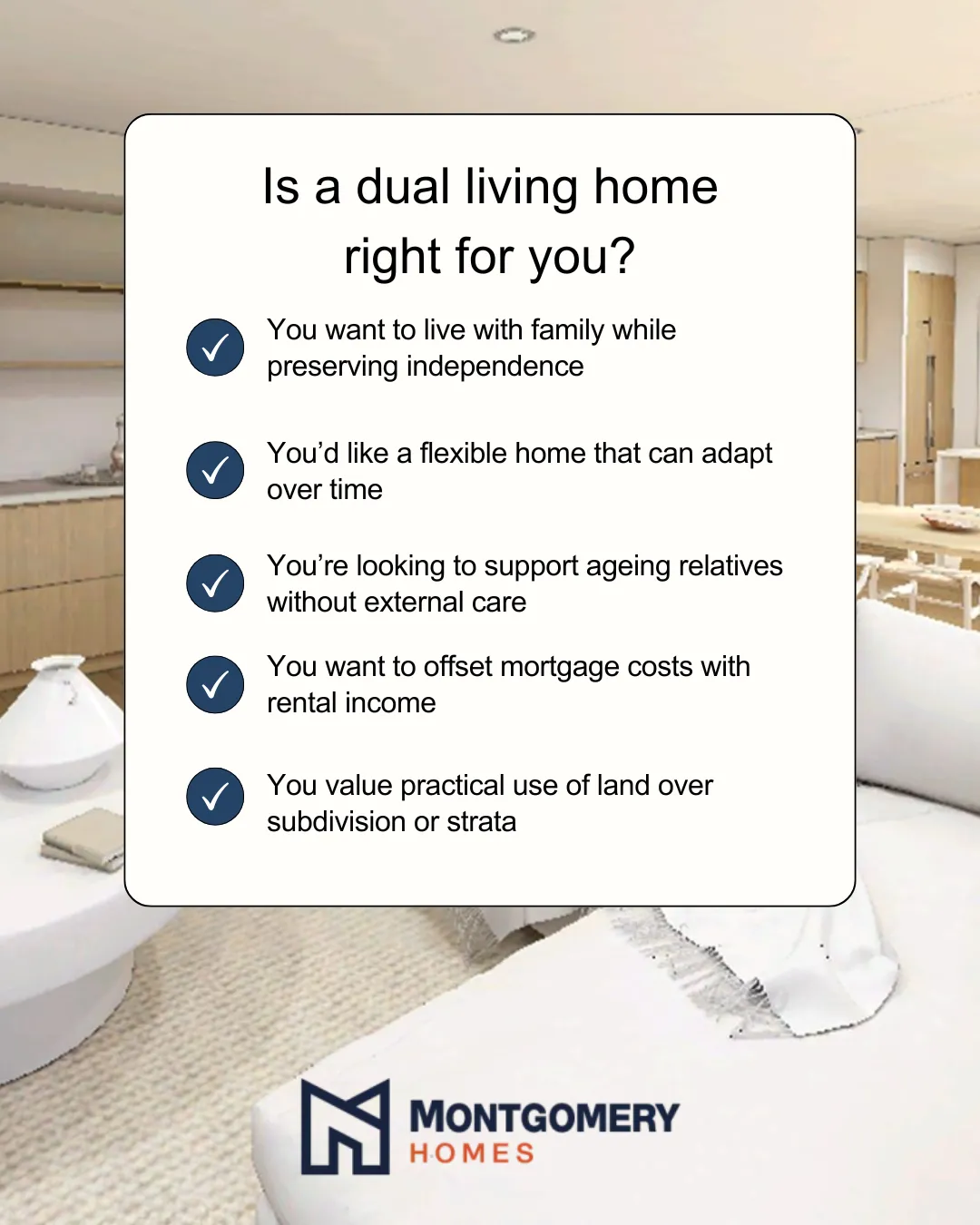
If your goal is genuine independence with flexibility in how you use the second dwelling in the future, without necessarily wanting legally separate property, a dual living home may suit your circumstances better than a duplex. It's worth weighing up both options against your actual goals before committing to a design.
First-home buyers
Lower entry price point than a comparable standalone house in the same area
A realistic way to get into a high-demand suburb sooner
May not suit if you want full renovation freedom or a completely private block with no shared structural elements
Downsizers
A smaller floor area and yard means less to maintain than a larger family home
Can free up equity if the existing home is subdivided and one side is sold
May not suit if you're not comfortable with a shared wall or, in a strata scheme, body corporate involvement
Investors
Two dwellings can generate two rental incomes from one land purchase
Torrens title duplexes offer the flexibility to sell one side independently later
May not suit if your finance strategy depends on treating the property exactly like a standalone house, since some lenders assess duplexes differently
Multi-generational families
Genuine separation and privacy while staying close to family
Front/back or side-by-side configurations both work well for this use case
May not suit if your priority is long-term flexibility to sell one dwelling independently, since family duplexes are sometimes built without subdivision in mind
Can you buy half a duplex? Yes, if the duplex is Torrens or strata-titled, each dwelling can be bought and sold independently. If it's on a single, undivided title, you'd be buying the whole property, including both dwellings.
Is a duplex Torrens or strata title? It depends on how the property was subdivided. Duplexes can be Torrens titled (two fully independent lots), strata titled (individual lots plus shared common property), or occasionally left on a single title with no subdivision at all.
Do you need a body corporate for a duplex? Only if it's strata titled. A Torrens title duplex doesn't require a body corporate, since each dwelling is fully independent. A strata-titled duplex, even a simple two-lot scheme, requires an owners corporation.
Is a duplex a good investment? It can be, particularly for the rental yield potential of two incomes from one land purchase and the option to sell one side later if Torrens titled. As with any property investment, the right fit depends on your finance strategy, the specific location and your long-term goals.
Duplex vs townhouse, what's the difference? A duplex is limited to two dwellings on one lot, while a townhouse development typically involves three or more attached dwellings under a larger strata scheme. Duplexes are more likely to achieve a Torrens title than townhouses.
How does insurance work for a duplex? If the duplex is strata titled, a single joint policy usually covers the shared building structure, arranged through the owners' corporation. If it's Torrens titled, each owner can typically arrange their own independent building insurance.
How much noise transfers between duplex dwellings? This depends heavily on the quality of acoustic separation in the shared wall or floor. Well-designed duplexes use acoustic-rated wall or floor systems specifically to reduce noise transfer between dwellings.
Can you renovate a duplex? You can generally renovate the interior of your own dwelling freely, but changes affecting the shared wall, roofline or common property usually require agreement from the neighbouring owner and may need council approval.
What's the difference between a duplex and dual occupancy? Dual occupancy is the formal planning term for two dwellings on one lot, and duplexes are a common example. In everyday language, "duplex" usually refers specifically to an attached, shared-wall dual-occupancy unit.
Do duplex dwellings share a driveway? Sometimes. Side-by-side duplexes often have separate driveways, while front/back configurations more commonly share an accessway. This is set out in the property's title documents and any registered easements.
Is dual living the same as a duplex? No. A dual living home is a single house with two internal living areas on a single title, built for a single household's use. A duplex is two separate dwellings, usually intended for independent ownership or sale. See the duplex vs dual living section above for the full comparison.
What is a dual-key property? A dual-key property is a single-title dwelling split into two separately lockable, independently accessible sections, often used to maximise rental flexibility. Unlike a duplex, it can't be sold as two separate properties.
Deciding between a duplex, a dual living home or another configuration comes down to what you actually want out of the second dwelling: independent resale down the track, or flexible living for your own family right now.
At Montgomery Homes, our specialty is dual-living home designs built for genuine independence within a single title, ideal for multi-generational families, ageing parents, or homeowners seeking rental flexibility without a formal subdivision.
If you're still weighing up whether a duplex or a dual living home suits your block and your goals, talk to our team. We'll walk you through how each option works for your specific site, and help you find the right fit for your family.